Articles
Colorado's New Energy Code, Explained
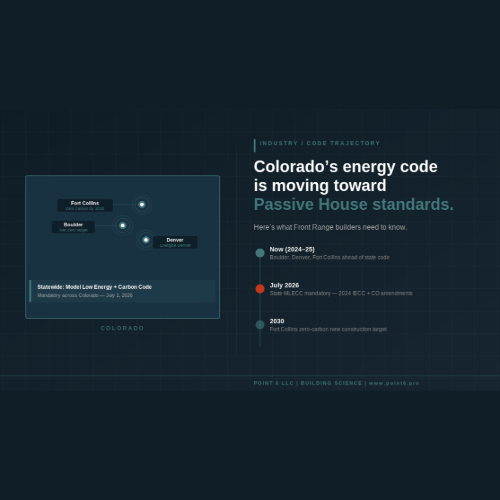
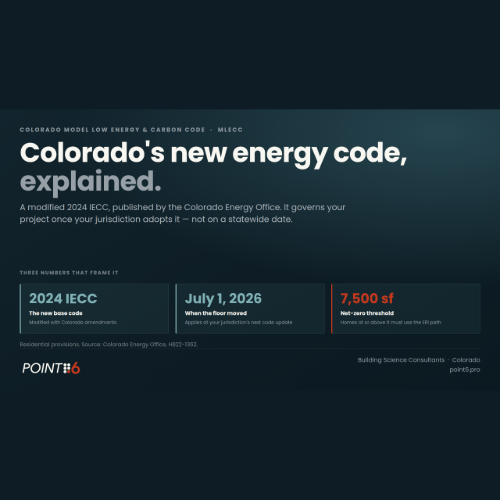
Colorado has a new statewide model energy code — the Model Low Energy and Carbon Code, or MLECC. It became the state minimum on July 1, 2026, and it applies to a given project once that project's jurisdiction adopts it.
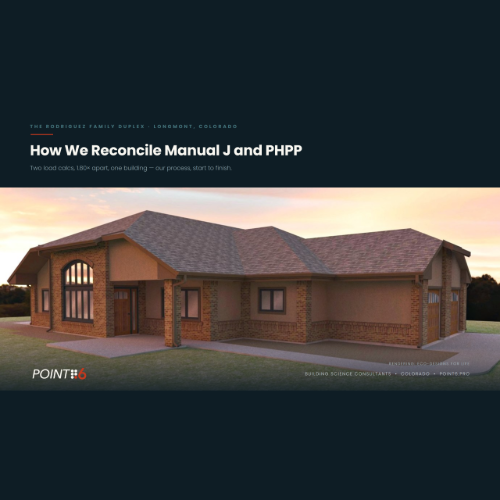
RECONCILING THE MANUAL J AND PHPP
Two "official" load numbers for the same building, 1.80x apart.
That's what our Manual J/S/D and PHPP models came back with on a Longmont, Colorado duplex: Manual J at 30,384 Btu/h building-wide, PHPP at 16,920 Btu/h.

Passive House Isn't Won at the Blower Door
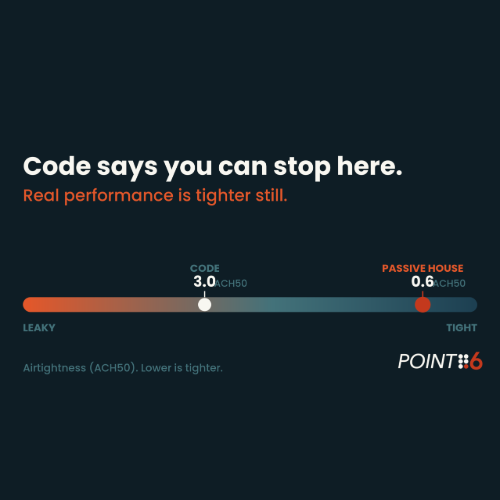
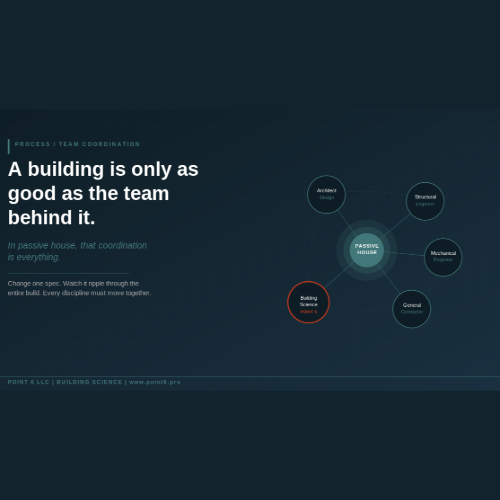
Passive House isn't won at the blower door. It's won three months earlier, on the day someone decides which layer is the air barrier — and whether the whole crew knows it.
A Well-Run Business Builds Better Buildings
Last week we sat down for our Q3 planning meeting at Point 6. A full day away from projects — no site visits, no PHPP models open — just the business itself on the table.
Some folks in our industry would call that a lost day. We call it what we call a blower-door test: non-negotiable.
That's not a habit we drifted into. It's the premise we started Point 6 on: a building can't be more disciplined than the business that delivers it.
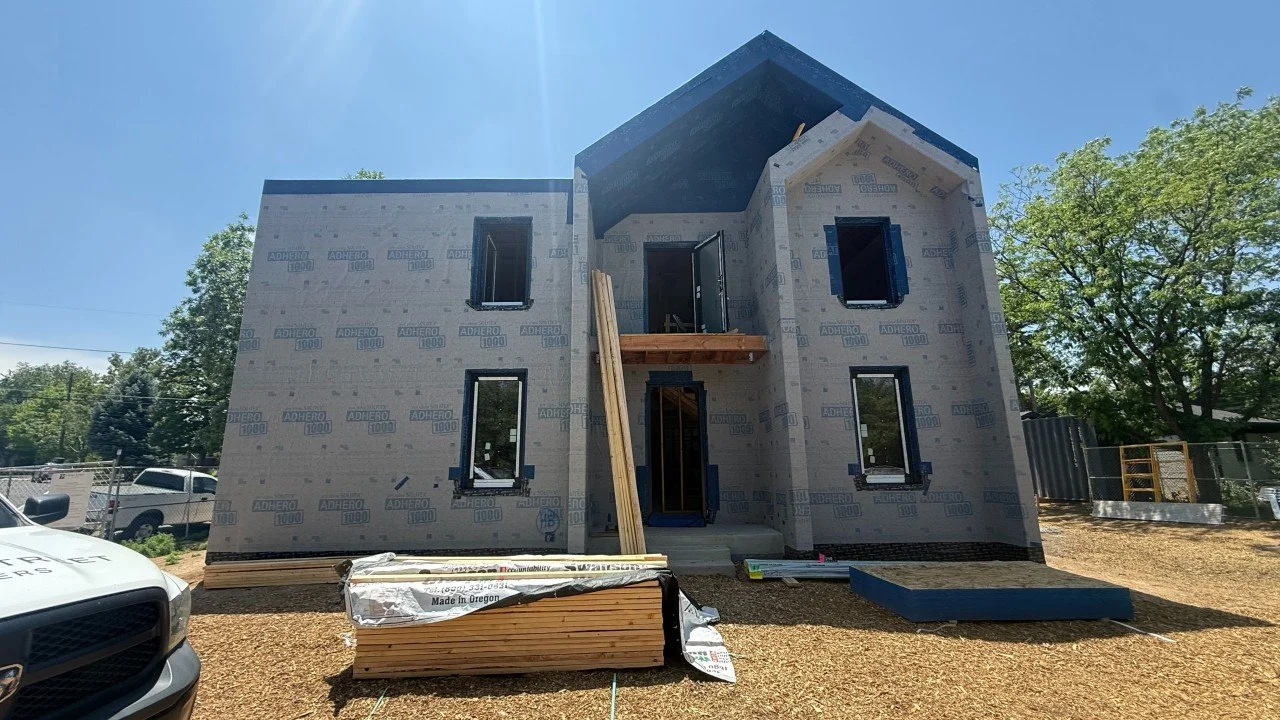
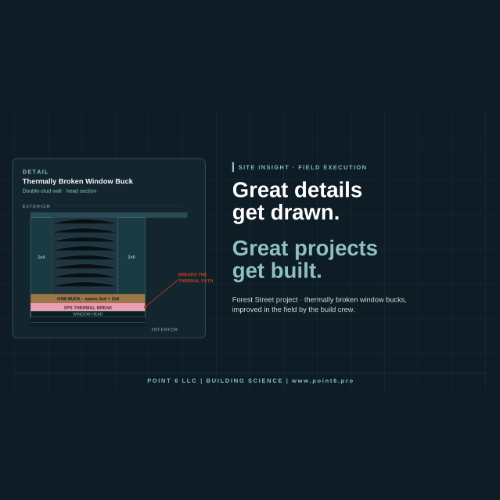
What We Draw Is What Gets Built: An Airtight Transition, from Detail to Field
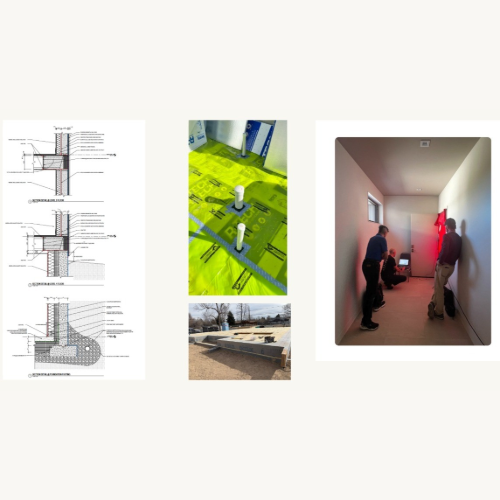
A Passive House detail is only as good as the crew that builds it — and a crew is only as good as the detail it's handed. The airtightness number doesn't come from the design or from the field. It comes from the two staying connected.
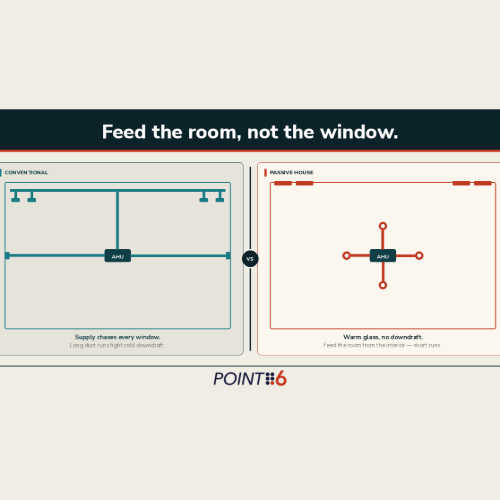
PHPP Is Right for a Passive House. Manual J Is Required. Here's How We Make Them Agree.
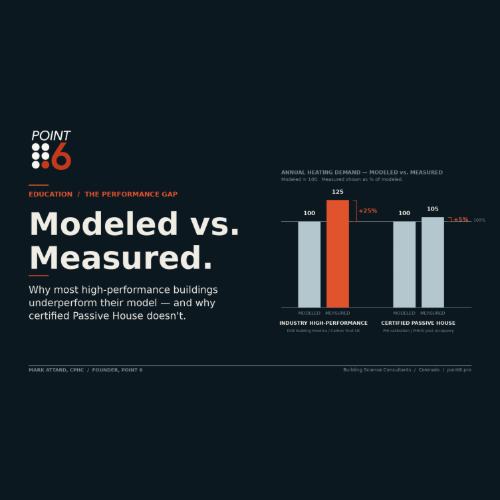
For a Passive House — a building that uses a fraction of the energy of a conventional one — the right tool for heating and cooling load is PHPP. It models the real building: tested airtightness, actual window performance, orientation, the whole enclosure working as one system. It produces a whole-house heating and cooling load you can trust.